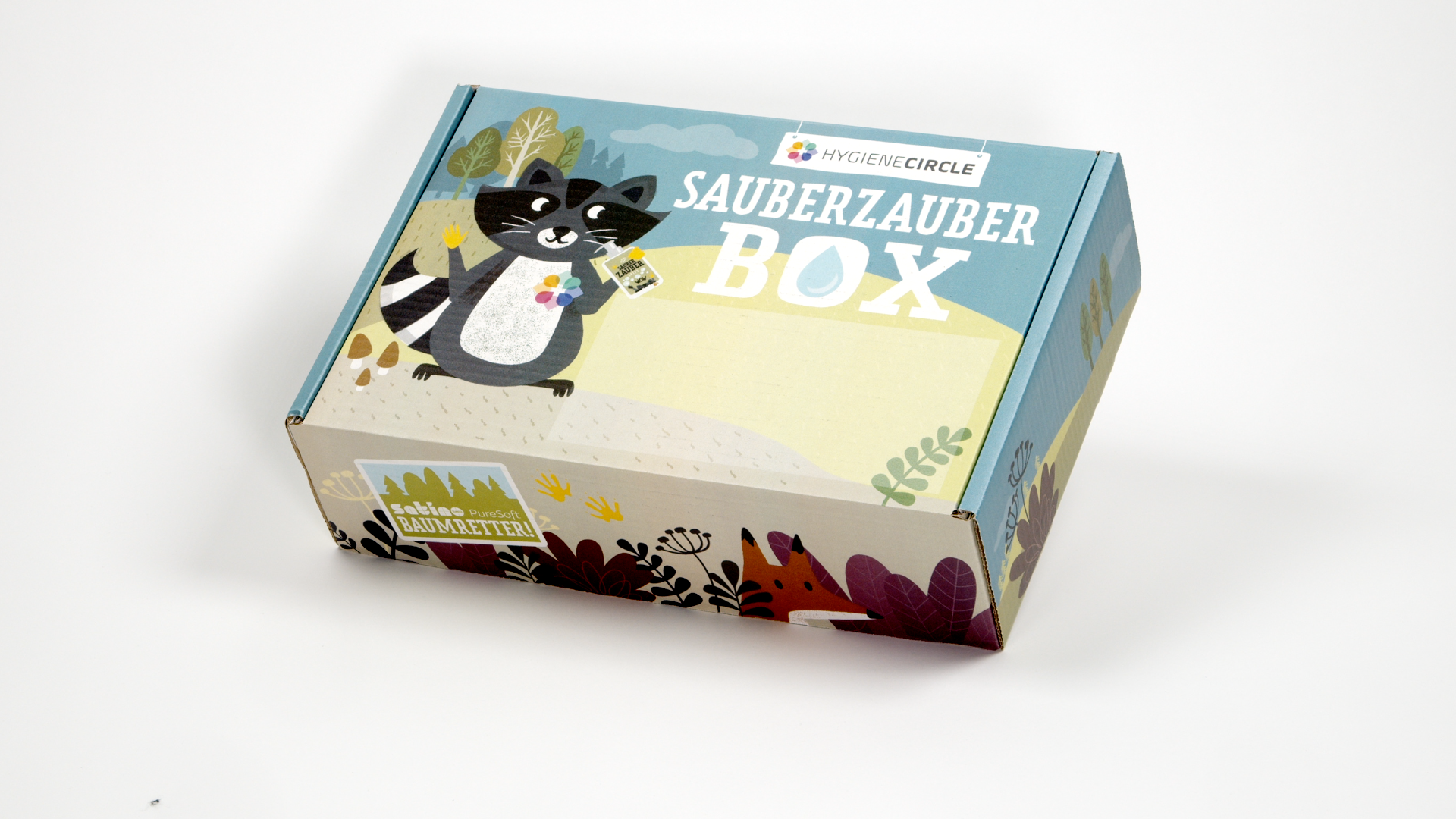

Following its successful launch in 2024, the initiative is now taking the next step: the Sauberzauber Box is now also available in English, allowing it to reach even more organisations and be used internationally.
Learning through play, acting sustainably
The Sauberzauber Box was developed by the WEPA Foundation in collaboration with HygieneCircle — an initiative led by former national football player and former HSV president Marcell Jansen — and WEPA Professional.
Its aim is to promote hygiene awareness from an early age while bringing sustainable solutions to life.
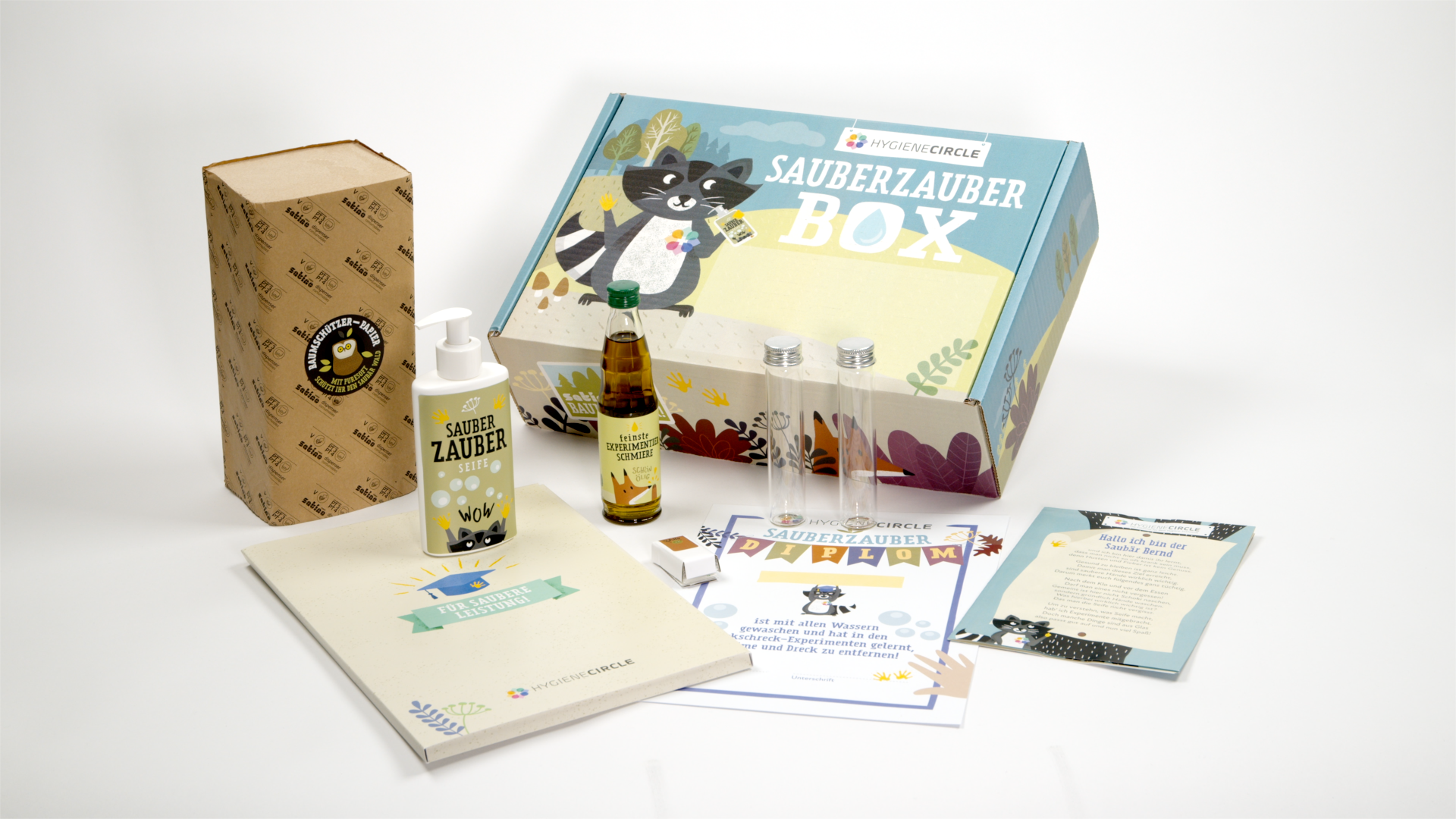
The box contains a range of interactive materials and experiments that actively engage children:
• recycled paper towels (“Tree-Saver Paper”)
• special “Sauberzauber Soap”, which highlights areas that have not been properly washed
• two child-friendly experiments demonstrating the effects of soap
• a Sauberzauber certificate for every child
In this way, hand hygiene is not only explained, but experienced first-hand.
Sustainability considered from the start
A key component of the box is the sustainable hygiene paper from WEPA Professional. The Satino PureSoft paper used is made from 100% recycled cardboard and has a significantly smaller environmental footprint than comparable virgin fibre products.
In this way, the Sauberzauber Box combines two important themes — hygiene and sustainability — presented in a way that is easy for young children to understand.
Working together for better hygiene standards
The WEPA Foundation, HygieneCircle and WEPA Professional are three strong partners, combining their expertise with a shared goal: to sustainably improve hygiene standards in educational settings while imparting knowledge that has a lasting impact.
The initiative demonstrates that education and practical application go hand in hand. Alongside products and solutions, the primary focus is on teaching hygiene skills at an early age — laying the foundation for healthy daily routines.
A concept with a bright future
The Sauberzauber Box is already being used in various nurseries and helps early years professionals teach children about hygiene in a clear and practical way.
With the new English version, the concept is now even more accessible – and can be used in an even wider range of settings in future.