

The best of both worlds:
Grass fibre and recycling
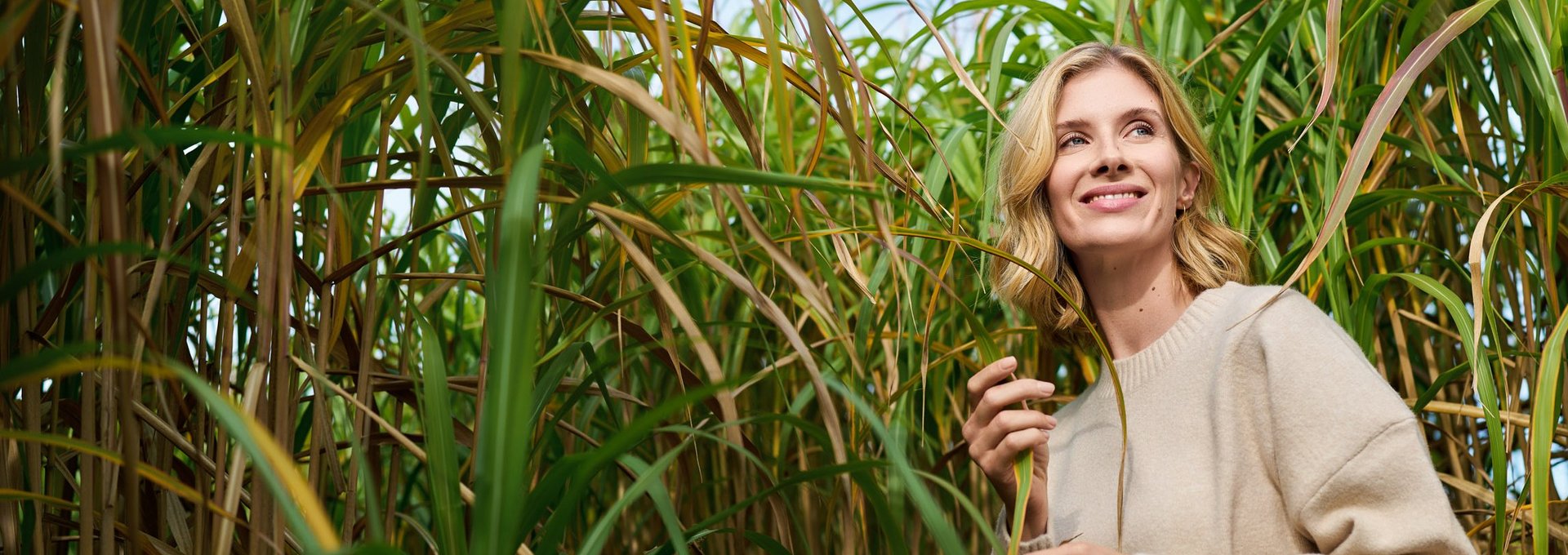
Satino GreenGrow represents a new generation of hygiene paper. Its foundation is grass fibres from Miscanthus – a fast-growing plant that is harvested annually. Combined with proven recycled materials such as office paper or paper cups, this creates a modern hygiene paper with convincing properties:
soft, highly absorbent, tear-resistant and with a natural look.
Everyday comfort
Responsibly produced
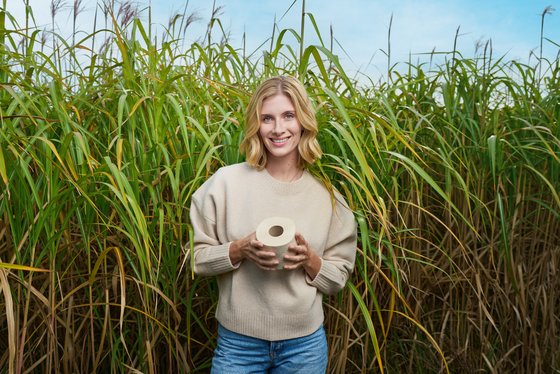
Satino GreenGrow combines noticeable comfort with consistent sustainability. The toilet and hand towel papers feel pleasant on the skin, are efficient in use and reliable for everyday applications.
Produced using 100% green electricity, Cradle to Cradle Certified® and awarded the FSC® Mix label, Satino GreenGrow stands for the highest product quality and is a responsible use of environmental resources.

Miscanthus grass
A future-proof raw material
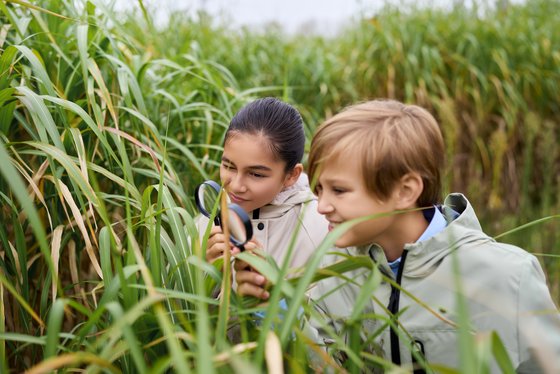
Miscanthus grass is particularly rich in cellulose, making it ideal for high-quality paper products. The plant can be harvested annually for up to 20 years. With a fibre yield of around 65%, grass fibre is about 30% more efficient than virgin wood – producing more paper from less raw material.*
This allows the same amount of paper to be produced using less land, making an important contribution to reducing pressure on valuable agricultural and forest areas.
During the first two years, Miscanthus receives plant protection. From the third year onward, only small amounts of nitrogen are applied to compensate for nutrients removed during harvesting. After that, the plant grows without pesticides, without additional fertilization and without irrigation.
Regionally grown, regionally processed
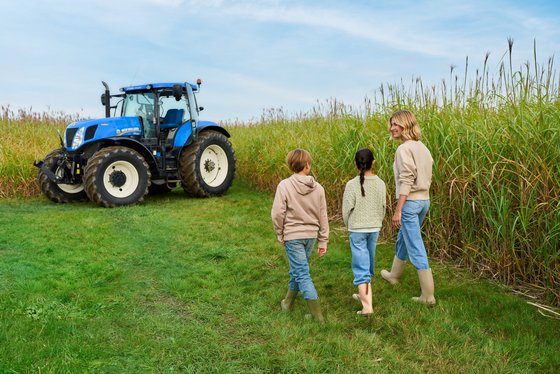
Growing Miscanthus grass in Western Europe ensures short transport routes, a stable supply of raw materials and long-term security. At the same time nature benefits as well: deep root systems improve soil structure, fallen leaves form fertile humus and especially in winter, the vegetated areas provide shelter and habitats for wildlife.

Hygiene paper with added value
In addition to comfort and regional sourcing, Miscanthus grass fibres offer clear ecological advantages:
- 65% lower ecological fibre footprint compared to the virgin wood fibres we use*
- After establishment, only minimal nitrogen fertilization and no further plant protection required
- Efficient raw material with up to 65% fibre yield
- Positive impact on soil quality and bio-diversity
- Regionally grown in Western Europe
*Based on the scientific Ecological Scarcity Method 2021 for life cycle assessment, using WEPA average data from 2023, verified by Carbotech (the use of different methodologies may lead to different results). Further information can be found at: ecological Footprint.